
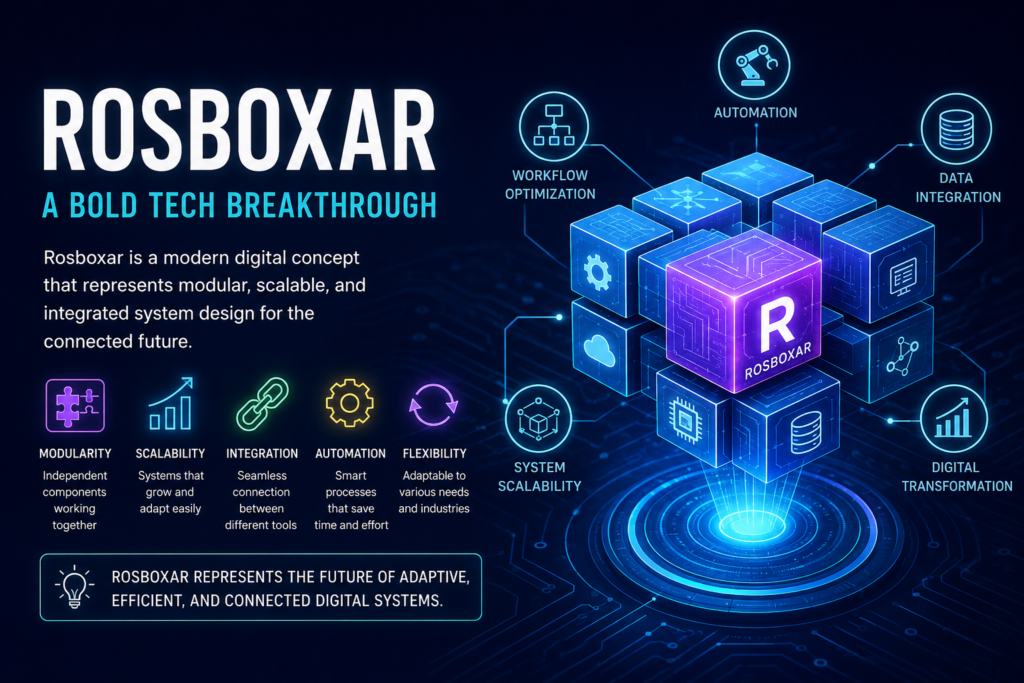

In the rapidly evolving digital world, new terms often appear that spark curiosity and discussion. One such term is Rosboxar, a concept that has been gaining attention in various online and technological discussions. While it does not belong to a single universally defined system, it is increasingly associated with modern digital frameworks, automation ideas, and flexible system structures.
Rosboxar is often interpreted as a conceptual model rather than a fixed product or platform. It represents adaptability, modular design, and the blending of multiple digital processes into one unified structure. Because of this flexibility, different communities use the term in slightly different ways depending on context.
Understanding Rosboxar requires looking beyond a single definition and exploring how it fits into broader technological thinking. It reflects how modern systems are designed to be scalable, interconnected, and efficient in handling complex tasks.
What is Rosboxar in Modern Digital Context
Rosboxar is commonly understood as a conceptual digital framework that represents modular and adaptable system design. Instead of being a single application, it symbolizes a way of thinking about how technology systems can be structured for flexibility and efficiency. In many discussions, Rosboxar is associated with automation and integration of multiple processes.
In modern digital environments, Rosboxar is often linked to ideas such as workflow simplification, system connectivity, and smart data handling. It reflects the shift from rigid software structures to more fluid and adaptive digital ecosystems. This makes it relevant in discussions about advanced software architecture and digital transformation.
Another important aspect of Rosboxar is its interpretive nature. Different industries may define it differently based on their needs. In some cases, it is seen as a model for organizing digital tools, while in others, it represents a symbolic approach to innovation and system design.
Origins and Evolution
The origins of Rosboxar are not tied to a single inventor or company, which adds to its mysterious and flexible identity. Instead, it appears to have emerged from collective discussions in digital communities where new frameworks and ideas are frequently explored. Over time, it became a term used to describe adaptive system thinking.
As technology evolved, especially with the rise of automation and integrated platforms, Rosboxar gained more relevance. Developers and digital thinkers began using it as a way to describe systems that combine multiple functionalities into a single, cohesive structure. This evolution reflects broader trends in software development.
Today, Rosboxar continues to evolve as a concept shaped by ongoing technological change. It is influenced by artificial intelligence, cloud computing, and system integration practices. Its meaning is expected to continue shifting as digital environments become more complex and interconnected.
How Rosboxar Concepts Are Used in Technology
In technology discussions, Rosboxar is often used to describe systems that combine automation, modularity, and scalability. It represents the idea that digital tools should not operate in isolation but rather work together seamlessly. This approach improves efficiency and reduces complexity.
Developers may use Rosboxar-inspired thinking when designing software architectures that require flexibility. For example, systems that need to handle changing user demands or large-scale data processing can benefit from such a conceptual model. It helps guide the structure of interconnected components.
Rosboxar is also relevant in the context of digital transformation strategies. Businesses adopting modern technologies often aim for systems that can adapt quickly, integrate easily, and scale efficiently. The Rosboxar concept aligns well with these goals, making it a useful reference point.
Core Features Associated with Rosboxar Systems
Rosboxar is often associated with several conceptual features that define its role in digital environments. These features are not fixed technical specifications but rather common characteristics found in systems described using the Rosboxar idea.
Below is a simplified table that outlines these features:
| Feature Area | Description |
|---|---|
| Modularity | Systems are divided into independent but connected components |
| Scalability | Ability to grow and adapt with increasing demand |
| Integration | Smooth connection between different digital tools and services |
| Automation | Reduction of manual effort through intelligent processes |
| Flexibility | Adaptability to different use cases and environments |
These features highlight why it is often used as a conceptual reference in system design. It represents a balance between structure and adaptability, allowing systems to remain efficient while evolving over time.
In practical terms, these features influence how developers and organizations think about building modern systems. Instead of focusing on rigid frameworks, they aim for adaptable ecosystems that can evolve alongside technological needs.
Benefits in Digital Workflows
One of the main benefits associated with Rosboxar is improved efficiency in digital workflows. By encouraging modular and integrated design, it allows systems to reduce redundancy and streamline operations. This leads to smoother performance across different tasks.
Another benefit is adaptability. Systems inspired by it principles can adjust to changing requirements without requiring complete redesigns. This makes them especially useful in fast-moving industries where flexibility is essential for success.
Rosboxar also supports better collaboration between digital tools. When systems are designed to work together seamlessly, it reduces friction and improves overall productivity. This interconnected approach is becoming increasingly important in modern technology environments.
Challenges and Misconceptions Around
Despite its usefulness as a concept, it is often misunderstood. One common misconception is that it refers to a specific software or product, when in reality it is more of a conceptual framework. This misunderstanding can lead to confusion when discussing its applications.
Another challenge is the lack of standardized definition. Because Rosboxar is used in different contexts, its meaning can vary widely. This makes it difficult to establish a single clear interpretation, especially for newcomers trying to understand it.
Additionally, some people overestimate its technical depth, assuming it represents a fully developed system. In truth, it is better understood as a guiding idea rather than a concrete technology, which can sometimes limit its clarity in technical discussions.
Future and Digital Transformation
The future of it is closely tied to the evolution of digital systems and automation technologies. As systems become more complex, the need for flexible and adaptive frameworks will continue to grow. it is likely to remain relevant in this context.
Emerging technologies such as artificial intelligence, distributed computing, and intelligent automation may further shape how it is interpreted. It could become a more structured concept as these technologies mature and integrate more deeply into everyday systems.
Ultimately, it represents a forward-thinking approach to digital design. Its emphasis on flexibility, integration, and adaptability aligns well with the direction modern technology is heading, making it a lasting conceptual influence.
Conclusion
Rosboxar is a fascinating and evolving concept in the digital world. While it does not have a single fixed definition, it plays an important role in how people think about modern system design, automation, and integration. Its flexibility allows it to adapt across different technological discussions.
By understanding Rosboxar, we gain insight into how digital systems are shifting toward more modular, scalable, and interconnected structures. It reflects a broader movement in technology where adaptability and efficiency are key priorities.
Although its meaning may continue to evolve, Rosboxar will likely remain a valuable conceptual tool for exploring the future of digital innovation and system architecture.
FAQs
1. What is Rosboxar in simple terms?
It is a conceptual idea used to describe flexible and modular digital system design rather than a specific product.
2. Is Rosboxar a software or application?
No, it is not a single software. It is a broader concept used in discussions about system structure and technology design.
3. Why is Rosboxar used in technology discussions?
It is used to explain ideas related to automation, integration, and adaptable system architecture in modern digital environments.
4. Does Rosboxar have a fixed definition?
No, its meaning varies depending on context, which is why it is often interpreted differently across industries and communities.
5. What is the future of Rosboxar?
Its future is linked to evolving technologies like AI and automation, where flexible system design will become increasingly important.