
In the ever-changing world of internet culture, new words and ideas appear almost daily, often carrying meanings that evolve faster than they can be formally defined. One such term gaining quiet attention in niche online spaces is Skonkka. While it may not yet be part of mainstream vocabulary, it represents a fascinating blend of creativity, identity, and digital expression.
Unlike traditional slang that usually has a fixed definition, Skonkka exists more as a conceptual idea. It is often associated with raw creativity, unconventional expression, and a refusal to conform to polished or commercialized standards. This makes it less of a word with a strict dictionary meaning and more of a living expression shaped by its users.
Understanding Skonkka requires stepping into the mindset of online communities where aesthetics, humor, and identity merge. It is not just about language—it is about how people choose to express themselves in spaces where creativity is unrestricted and constantly evolving.
Also Read: Cumhuritey: A Fascinating Look Into Modern Media
What is Skonkka in Modern Digital Culture
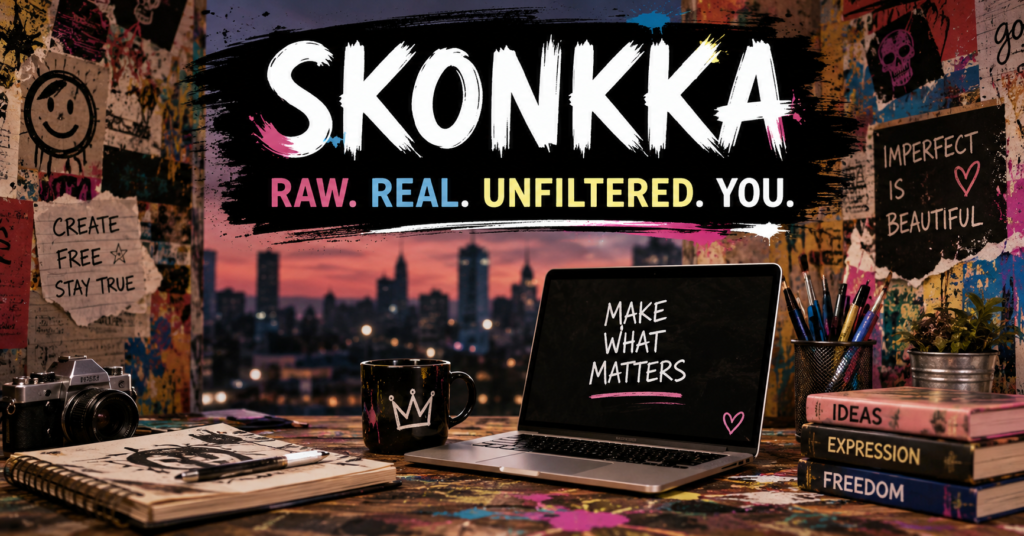
At its core, Skonkka is best understood as a symbolic expression of raw, unfiltered creativity. It is often used to describe something intentionally imperfect, yet expressive in a way that feels authentic. Rather than aiming for perfection, it celebrates individuality and spontaneous creation.
In many discussions, Skonkka is linked to the idea of doing things without overthinking polish or structure. It reflects a mindset where expression matters more than presentation. Whether it appears in art, writing, music, or digital content, it often carries a sense of freedom from traditional standards.
This makes Skonkka especially appealing in online environments where users constantly experiment with identity and creativity. It becomes a label for things that feel “real,” even if they are messy, chaotic, or unconventional.
Origin and Digital Emergence of Skonkka
The origin of Skonkka is not clearly tied to a single moment or creator. Instead, it appears to have developed organically within smaller internet communities where experimental language often emerges. These spaces are known for creating terms that evolve through repeated use rather than formal definition.
Over time, Skonkka began appearing in discussions related to digital aesthetics and creative expression. It was not introduced through traditional media or academic sources but grew through informal sharing, interpretation, and adaptation across online platforms.
As it spread, its meaning expanded. Some users interpreted it as a lifestyle idea, while others saw it as an artistic philosophy. This fluid evolution is what makes Skonkka unique—it is shaped by collective interpretation rather than a fixed origin story.
Cultural Meaning and Interpretation of Skonkka
Skonkka carries different meanings depending on who uses it and in what context. For some, it represents freedom from perfectionism, while for others, it reflects a deeper rejection of mainstream creative standards. In both cases, it emphasizes authenticity over refinement.
It is also often connected to emotional expression. Content described as Skonkka-like tends to feel personal, unfiltered, and sometimes even chaotic. This emotional honesty is part of what gives the concept its growing appeal among digital creators.
In a broader cultural sense, Skonkka reflects how internet communities are reshaping language itself. Words no longer need formal definitions to carry meaning; instead, they evolve through shared understanding and repeated use in creative environments.
Also Read: Amazing Gayfirir Trend: A Fresh Digital Mystery
Skonkka in Online Communities and Creative Spaces
In online communities, Skonkka is often used as a descriptive label for content that feels intentionally raw or experimental. It might refer to visual art, short videos, or even written posts that reject traditional formatting in favor of spontaneity.
This usage highlights how digital spaces encourage experimentation. People are more willing to share unfinished, imperfect, or unconventional work because it resonates with audiences who value authenticity. Skonkka becomes a shorthand for that shared understanding.
Interestingly, Skonkka also functions as a kind of cultural identity marker. Those who use it often recognize a shared appreciation for creative freedom, making it both a descriptive term and a subtle form of belonging within certain online groups.
Key Characteristics Associated with Skonkka Culture
To better understand how Skonkka is interpreted in practice, it helps to look at its recurring characteristics. These are not strict rules but common themes that appear across different uses of the concept.
| Characteristic | Description |
|---|---|
| Raw Expression | Focus on unfiltered, natural creativity without heavy editing |
| Imperfection | Acceptance of flaws as part of artistic identity |
| Experimental Style | Willingness to break traditional rules of structure or design |
| Emotional Authenticity | Emphasis on real, personal feeling over polished presentation |
| Community Interpretation | Meaning shaped collectively rather than defined formally |
This table shows that Skonkka is less about rigid definition and more about shared creative behavior. It thrives in environments where experimentation is encouraged and perfection is not required.
Why Skonkka Resonates in Today’s Digital World
The appeal of Skonkka lies in how it aligns with modern digital fatigue. As online spaces become increasingly polished and algorithm-driven, many users feel pressure to present idealized versions of their creativity. Skonkka offers an alternative to that pressure.
It encourages people to create without overthinking how their work will be perceived. This shift is particularly meaningful in environments where engagement metrics often influence creative decisions. Skonkka resists that structure by valuing expression over performance.
Another reason for its resonance is its adaptability. Because it does not have a strict definition, people can apply it in ways that feel personally meaningful. This flexibility allows it to remain relevant even as digital trends change rapidly.
Misunderstandings and Misuse of Skonkka
Like many emerging internet concepts, Skonkka is sometimes misunderstood or misused. One common misunderstanding is treating it as a fixed style or aesthetic, when in reality it is more of a flexible idea. This can lead to oversimplification of its meaning.
Another issue is overuse in contexts where it does not fit naturally. When applied too broadly, Skonkka loses its conceptual depth and becomes just another vague label rather than a meaningful expression of creativity.
There is also confusion around its seriousness. Some people interpret it as purely humorous or ironic, while others see it as a genuine creative philosophy. In truth, it can exist in both spaces depending on how it is used.
Future of Skonkka in Digital Expression
The future of Skonkka depends largely on how online communities continue to shape it. If it remains flexible, it may evolve into a broader cultural idea representing raw creativity across different platforms.
It may also fade or transform into new variations, as internet language is constantly shifting. Many similar terms in digital culture have followed this path, evolving into new meanings or being absorbed into other trends.
However, the core idea behind Skonkka—valuing authenticity and imperfection—will likely continue influencing creative expression even if the term itself changes or disappears over time.
Conclusion
Skonkka represents more than just a word; it reflects a mindset shaped by modern digital culture. It captures the desire for authenticity in a world where polished content often dominates attention. Through its flexible meaning, it allows people to explore creativity without strict boundaries.
Its evolution shows how internet communities actively participate in shaping language. Instead of waiting for formal definitions, users collectively build meaning through usage, interpretation, and shared understanding. This makes Skonkka a living concept rather than a static definition.
Ultimately, whether it becomes widely recognized or remains niche, Skonkka highlights an important shift in how creativity is perceived today. It reminds us that imperfection can be expressive, and that meaning often emerges from the freedom to create without limits.
Also Read: Merfez: An Inspiring Escape Filled With Wonder
FAQs
1. What does Skonkka mean in simple terms?
It generally refers to raw, unpolished, and authentic creative expression in digital spaces.
2. Is Skonkka an official word?
No, it is not an official dictionary word. It exists mainly in online communities and informal discussions.
3. Where did Skonkka come from?
It appears to have originated in niche internet spaces and evolved through community usage rather than a single source.
4. Is Skonkka a style or philosophy?
It can be seen as both. Some treat it as a creative style, while others view it as a mindset focused on authenticity.
5. Why is Skonkka becoming popular online?
Because it resonates with people who prefer unfiltered, experimental, and honest forms of creative expression.