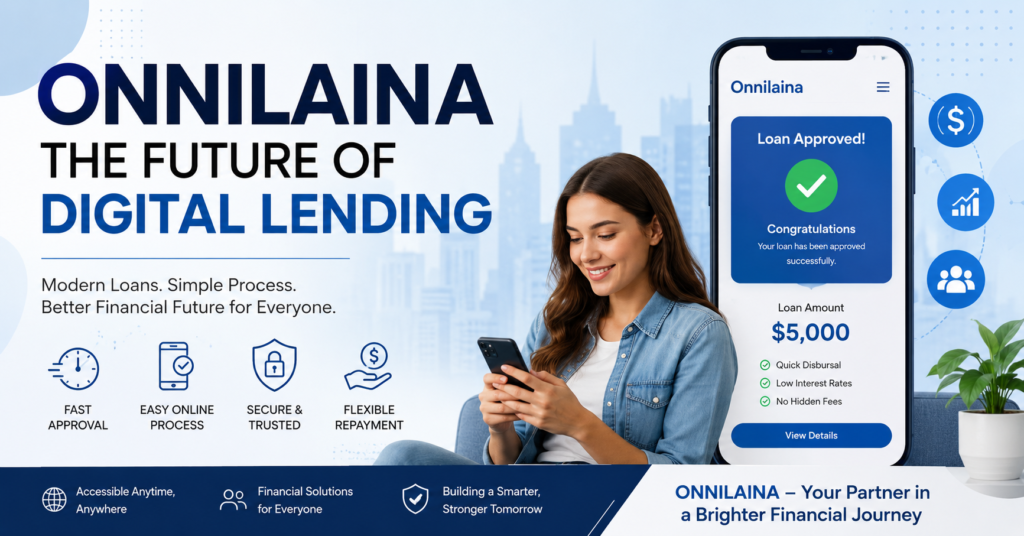

The world of finance has changed dramatically over the last decade. Traditional banking systems that once depended on paperwork, long waiting periods, and in-person meetings are gradually being replaced by faster and more accessible digital solutions. Among the growing number of online financial concepts attracting attention, Onnilaina has emerged as a term that sparks curiosity and discussion. Although still relatively new to many people, it represents a broader movement toward digital convenience, smarter lending systems, and user-focused financial experiences.
Modern consumers expect quick responses and smooth services in nearly every area of life. From online shopping to digital communication, people have become accustomed to instant access and simplified processes. Financial services are no exception. This is one reason why concepts associated with online lending platforms continue to gain momentum. Onnilaina appears to fit within this modern financial environment by reflecting ideas connected to accessibility, flexibility, and technology-driven lending solutions.
Understanding this growing concept requires looking beyond just the name itself. It is important to explore the role of digital finance, the behavior of modern borrowers, and the reasons why online financial platforms continue to influence global markets. By examining these elements, readers can better understand why this term has become increasingly visible across online discussions and financial conversations.
Understanding the Meaning Behind Onnilaina
The word Onnilaina is believed to have linguistic roots connected to the Finnish language. The term combines ideas associated with luck, positivity, and loans, creating a phrase that can loosely be interpreted as a favorable or fortunate lending experience. This interpretation has helped the term develop a modern and approachable image within digital finance discussions.
Unlike traditional financial terminology that often sounds technical or intimidating, this term carries a softer and more welcoming tone. That matters in today’s digital economy because many users seek services that feel simple, understandable, and trustworthy. The emotional connection created through branding and language plays a major role in how financial platforms attract and retain customers. A name that feels positive can influence how users perceive a service before they even explore it further.
As online financial systems continue to evolve, terms like this become part of broader conversations about convenience and innovation. Many people now associate digital lending with speed, transparency, and flexibility. Because of this, names that communicate comfort and reliability naturally gain attention in online spaces where financial technology continues to expand rapidly.
The Growth of Digital Lending Platforms
Digital lending has transformed the financial landscape by making borrowing easier and faster than ever before. In the past, individuals often needed to visit banks physically, submit printed documents, and wait days or even weeks for approval. Today, many online platforms allow users to complete the same process in minutes through mobile devices or computers.
This shift has been driven largely by technology and changing consumer expectations. People now value convenience above almost everything else. Online financial platforms have responded by creating streamlined systems that minimize paperwork and automate approval procedures. These changes have opened borrowing opportunities for people who may have struggled with traditional financial systems in the past.
The increasing popularity of digital finance has also created room for new ideas, branding concepts, and service models. Terms associated with modern lending solutions often spread quickly online because users actively search for alternatives that save time and reduce stress. In this environment, concepts connected to innovative lending services naturally attract public attention and discussion.
Why Online Borrowing Appeals to Modern Consumers
One of the biggest reasons online borrowing has become popular is accessibility. Traditional financial institutions sometimes create barriers that make borrowing difficult for ordinary individuals. Long forms, complex requirements, and strict schedules can discourage people from applying for financial assistance. Digital lending systems remove many of these frustrations by offering more flexible and user-friendly experiences.
Another important factor is speed. Modern consumers are used to receiving information instantly, whether they are streaming videos or ordering products online. Waiting several days for loan processing no longer feels practical to many borrowers. Digital systems address this issue by using automated technologies that evaluate applications quickly and provide near-instant feedback.
Transparency also plays a major role in consumer trust. Many modern lending services clearly display repayment terms, interest details, and eligibility requirements in a way that is easier to understand. This creates a more comfortable experience for users who may feel overwhelmed by complicated financial language. As a result, more people are becoming open to exploring online lending opportunities instead of relying solely on traditional banking systems.
How Technology Shapes Financial Innovation
Technology is at the center of nearly every modern financial advancement. Artificial intelligence, automation, data analysis, and mobile applications have significantly changed how financial services operate. These technologies help platforms process applications faster, reduce operational costs, and personalize services for users with different financial needs.
Machine learning systems can analyze financial behavior and identify patterns that assist in decision-making. Instead of relying only on traditional credit scoring methods, some digital lending services evaluate broader financial data to understand a borrower’s situation more accurately. This approach can create opportunities for individuals who may not fit the conventional banking model but still demonstrate financial responsibility.
Mobile technology has further accelerated this transformation. Many people now manage their finances directly from smartphones, including transfers, savings, investments, and loan applications. This convenience has changed consumer expectations permanently. Financial services are increasingly designed around mobile accessibility because users want flexibility and control regardless of location or time of day.
The Role of Branding in Financial Platforms
Brand identity has become incredibly important in the digital finance industry. Consumers often compare dozens of online platforms before choosing a financial service, and first impressions strongly influence their decisions. Names that sound modern, trustworthy, and memorable tend to attract more attention in crowded online spaces.
Financial branding today focuses heavily on emotional connection. People want financial services that feel approachable rather than intimidating. A platform associated with positivity and simplicity can stand out more effectively than one using overly formal language. This explains why modern financial brands often use creative naming strategies designed to appear welcoming and innovative.
Visual identity also contributes to public perception. Clean website designs, simple navigation systems, and friendly communication styles create a sense of reliability. In the digital world, users often judge a service within seconds of visiting a platform. Strong branding therefore becomes a crucial part of building trust and encouraging user engagement.
Comparing Traditional Lending and Digital Lending
The difference between traditional lending and digital lending can be understood more clearly by examining several key areas of service and accessibility.
| Feature | Traditional Lending | Digital Lending |
|---|---|---|
| Application Process | Paper-based and lengthy | Online and simplified |
| Approval Speed | Several days or weeks | Often within minutes |
| Accessibility | Limited office hours | Available 24/7 |
| Documentation | Heavy paperwork | Digital submission |
| Customer Experience | Formal and complex | User-friendly and fast |
| Technology Usage | Limited automation | Advanced automation systems |
Traditional banks continue to play an important role in the financial system, especially for large-scale financing and established banking relationships. However, digital lending platforms have introduced a level of speed and convenience that appeals strongly to modern consumers. This has created competition that pushes the financial industry toward further innovation.
Many users now combine both systems depending on their needs. They may rely on traditional banks for long-term financial planning while using online services for quicker financial solutions. This blended approach reflects the changing habits of consumers who value flexibility and efficiency in managing money.
As financial technology continues to improve, the gap between traditional and digital systems may continue to narrow. Established banks are increasingly adopting digital tools to remain competitive, while online platforms continue refining their services to build greater trust and reliability among users.
Challenges Facing Modern Lending Platforms
Despite rapid growth and popularity, digital lending platforms still face several important challenges. Security remains one of the biggest concerns for users. Because financial services involve sensitive personal information, consumers want assurance that their data is protected from cyber threats and unauthorized access.
Regulatory compliance is another major issue within the online finance industry. Financial laws vary across countries and regions, making it difficult for some platforms to operate globally. Companies must adapt to changing regulations while maintaining smooth user experiences. This balance between compliance and convenience can be difficult to achieve.
Consumer trust also remains essential. While many people appreciate fast online services, some still worry about hidden fees, unclear repayment conditions, or unreliable platforms. Building long-term credibility requires transparency, responsible lending practices, and consistent customer support. Without these elements, even technologically advanced services may struggle to retain users over time.
The Influence of Financial Accessibility
Financial accessibility has become one of the most important goals within modern finance. Millions of people around the world still face difficulties accessing traditional banking systems due to geographic limitations, strict requirements, or lack of financial history. Digital lending services attempt to reduce these barriers by offering more inclusive solutions.
Access to financial services can significantly affect education, business opportunities, healthcare, and overall quality of life. Individuals who previously struggled to secure financial assistance may now find new possibilities through digital platforms that evaluate applications differently from traditional institutions. This can encourage entrepreneurship and economic growth in underserved communities.
Technology also allows financial services to reach remote regions where physical banks may not exist. Mobile internet access has created opportunities for people to manage money, apply for loans, and conduct financial transactions from almost anywhere. This increased accessibility represents one of the most transformative aspects of the digital finance revolution.
Consumer Expectations in the Digital Era
Modern consumers expect seamless digital experiences across every industry, including finance. Convenience, speed, and personalization are no longer considered luxuries but standard expectations. Financial platforms that fail to meet these expectations often struggle to compete in increasingly crowded markets.
Users also value simplicity. Complicated interfaces and confusing financial language can discourage potential customers from completing applications or using services regularly. This is why successful digital finance platforms prioritize clean design, intuitive navigation, and straightforward communication. A simple user experience often determines whether customers remain loyal to a platform.
Customer support has also evolved significantly in the digital age. Many users expect immediate assistance through live chat systems, automated help centers, or quick-response communication channels. Providing responsive support creates confidence and reassurance, especially when users are dealing with financial decisions that directly affect their lives.
The Future Outlook for Onnilaina
The growing visibility of Onnilaina reflects broader trends shaping the future of finance. As digital borrowing becomes increasingly normalized, terms connected to online financial innovation are likely to continue gaining public recognition. Whether used as a brand concept, lending platform idea, or symbolic representation of modern finance, the term captures the direction in which financial technology is moving.
Future financial systems will likely become even more personalized and data-driven. Artificial intelligence may help create customized borrowing experiences based on individual financial habits and goals. Automation will continue reducing delays and simplifying financial procedures, making services more accessible for wider audiences around the world.
Public trust will remain a defining factor in long-term success. No matter how advanced technology becomes, users still want honesty, clarity, and security when dealing with money. Financial platforms that successfully combine innovation with transparency are likely to shape the next generation of digital finance and continue influencing how consumers interact with lending systems.
Conclusion
Onnilaina represents more than just an unusual or emerging internet term. It reflects the broader transformation taking place within the financial industry as digital technology reshapes how people borrow, manage, and access money. Modern consumers increasingly seek financial services that are fast, transparent, flexible, and easy to understand. This demand has encouraged the rise of online lending concepts that prioritize convenience and accessibility over traditional complexity.
The growth of digital finance has created opportunities for innovation across multiple areas, including branding, technology, accessibility, and customer experience. Financial platforms are no longer judged solely by interest rates or approval requirements. Users also evaluate trustworthiness, design simplicity, communication quality, and overall convenience. Terms like Onnilaina gain attention because they fit naturally into this evolving digital environment.
As technology continues advancing, the financial world will likely become even more connected, automated, and personalized. Concepts associated with modern lending systems may continue expanding as consumers look for smarter and more adaptable financial solutions. Whether viewed as a financial brand idea, a symbolic digital finance concept, or a reflection of changing consumer behavior, Onnilaina highlights the ongoing evolution of how people interact with money in the modern age.
FAQs
1. What does Onnilaina mean?
The term is believed to combine Finnish words associated with luck or happiness and loans, creating a positive financial meaning.
2. Is Onnilaina a real financial platform?
The term is currently used in different ways online, including as a financial concept, branding idea, and digital lending-related topic.
3. Why are digital lending platforms becoming popular?
They offer faster approvals, easier applications, greater accessibility, and more convenient financial experiences compared to traditional systems.
4. Is online borrowing safe?
Online borrowing can be safe when users choose trustworthy platforms with secure systems, transparent terms, and strong customer support.
5. How is technology changing the lending industry?
Technology improves speed, accessibility, automation, customer experience, and financial decision-making within modern lending services.